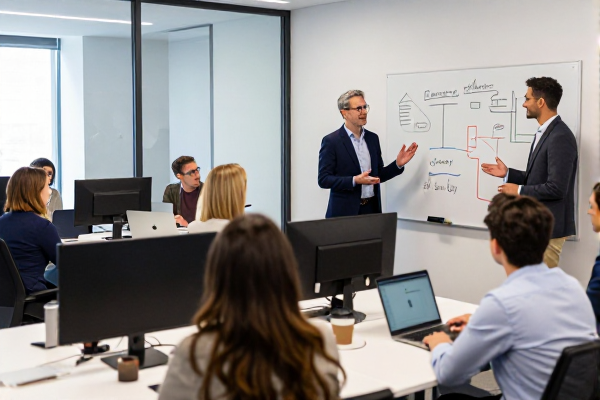
Securing work opportunities in the USA as a foreign national is a structured and viable process, centered on obtaining the correct work authorization, understanding the in-demand job markets, and deploying a targeted search strategy. The most common pathway is through employer sponsorship for a work visa, with STEM, healthcare, and business/finance roles presenting the highest sponsorship rates. Success requires early preparation, professional networking, and a clear understanding of legal requirements.
What Are the Most Common Work Visas for Foreign Professionals?
The U.S. immigration system offers several non-immigrant visa categories for employment. The appropriate visa depends on your profession, qualifications, and the sponsoring employer's needs.
- H-1B Visa: For professionals in "specialty occupations" requiring a bachelor's degree or higher (e.g., IT, engineering, finance, architecture). This is a cap-subject visa with an annual lottery, making timing and employer sponsorship critical.
- L-1 Visa: For intra-company transferees who have worked for a foreign affiliate, parent, or subsidiary for at least one year and are being transferred to a U.S. office in a managerial or specialized knowledge capacity.
- TN Visa: Exclusively for citizens of Canada and Mexico in professions listed under the USMCA (formerly NAFTA) treaty, such as accountants, engineers, and scientists. It requires a job offer but not a lottery.
- O-1 Visa: For individuals with "extraordinary ability or achievement" in sciences, arts, education, business, or athletics, demonstrated by sustained national or international acclaim.
- E-3 Visa: A specialty visa for citizens of Australia, similar to the H-1B but with a separate, dedicated annual quota.
Note: The PERM Labor Certification process is often the first step for an employer seeking to sponsor a foreign worker for permanent residency (a Green Card). This process tests the U.S. labor market to ensure no qualified U.S. workers are available for the position.
Which Industries and Roles Have the Highest Sponsorship Rates?
Based on our assessment of U.S. Department of Labor data and major recruitment trends, sponsorship is concentrated in fields with talent shortages. The following table highlights high-potential sectors:
| Industry/Sector | Example In-Demand Roles | Key Notes |
|---|
| Science, Technology, Engineering, and Mathematics (STEM) | Software Developers, Data Scientists, Systems Analysts, Mechanical Engineers | Dominates H-1B petitions. Salaries are highly competitive, often ranging from $90,000 to $150,000+ depending on experience and location. |
| Healthcare & Life Sciences | Registered Nurses, Physicians, Medical Scientists, Biomedical Engineers | Driven by an aging population. Some roles may require state-specific licensing and credential evaluation. |
| Business, Finance, and Management | Financial Analysts, Management Consultants, Market Research Analysts | Especially for roles requiring global market knowledge or specialized quantitative skills. |
| Education & Research | University Professors, Postdoctoral Researchers, Specialized Instructors | Often affiliated with J-1 or H-1B visas for academic institutions. |
How Can Foreign Job Seekers Stand Out in the U.S. Market?
A proactive and polished approach is non-negotiable. Begin your search well before your intended start date—often 6 to 12 months in advance for roles requiring visa sponsorship.
- Optimize Your Application for U.S. Standards: Your resume should be concise, achievement-oriented, and typically one to two pages. A cover letter must be tailored to each company, explicitly stating your right to work (e.g., "require H-1B sponsorship") and the value you bring. Use platforms like ok.com to research company profiles and role expectations.
- Leverage Professional Networking: Platforms like LinkedIn are indispensable. Connect with professionals in your field, alumni from your university working in the U.S., and recruiters. Informational interviews can provide critical insights and lead to unadvertised opportunities.
- Target Employers with a History of Sponsorship: Larger corporations and tech firms have dedicated legal teams for immigration. Research companies that regularly file H-1B petitions (U.S. government data is public) to increase your chances of finding a willing sponsor.
- Prepare for the U.S. Interview Style: Interviews often involve multiple rounds with behavioral questions ("Tell me about a time when...") and technical assessments. Practice clearly articulating your experience and be prepared to discuss salary expectations based on industry standards for the job's location.

What Are the Key Cultural and Practical Considerations?
Beyond the paperwork, adapting to the U.S. work environment is crucial for long-term success.
- Direct Communication: U.S. business culture values directness, clarity, and active participation in meetings. It is acceptable to respectfully debate ideas and ask questions.
- Cost of Living & Salary Negotiation: Research the cost of living in your target city (e.g., San Francisco vs. Atlanta). When discussing salary, provide a reasonable range based on your research rather than a single figure. Negotiation is expected for professional roles.
- Building Credit History: Upon arrival, you will need to establish a U.S. credit history. Start with a secured credit card to build a financial profile necessary for renting apartments or securing loans.
Navigating U.S. work opportunities requires a methodical, two-pronged strategy: aligning your skills with high-sponsorship industries and meticulously managing the legal and professional application process. Begin by thoroughly researching your eligible visa path and updating your professional materials to U.S. norms. Focus your job search on proven sponsor companies and invest heavily in building a stateside professional network online. Finally, prepare thoroughly for cultural integration, as understanding workplace norms is as important as securing the job offer itself. The process is complex but achievable with precise planning and persistence.


 Share
Share