Math & Science Tutor for Grades 6–10 | Kitchener-Waterloo
CA$25
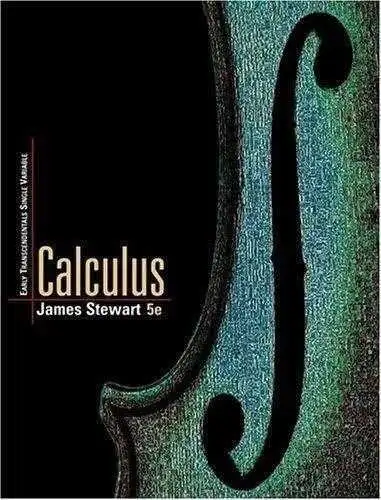
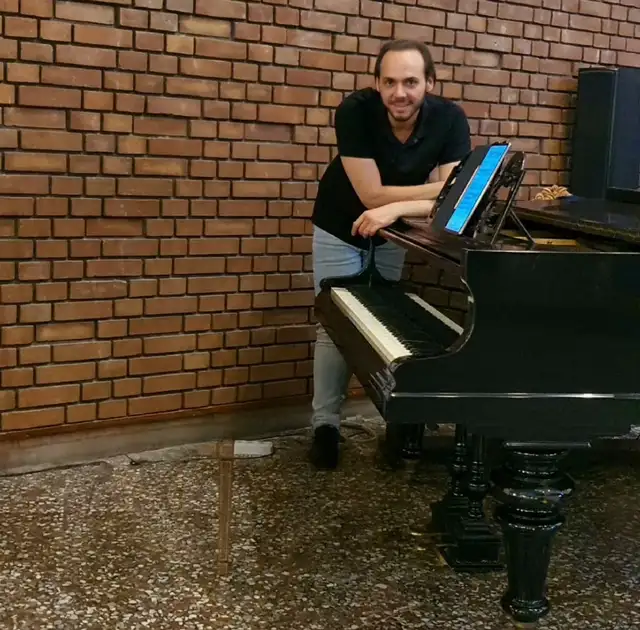
I am Tigran Petrosian, a Follower of Christ, Mathematician, Kung Fu Practitioner with a Bachelor’s degree in Mathematics, focused on Pure Mathematics, from the University of Waterloo. For over 20 years, I have tutored students one-on-one—primarily in Grade 11 and 12, but also in first and second-year university courses, and even a Group Theory (Abstract Algebra) class for a third-year student. A major problem with high school Calculus is that it fails to provide a deep, basic foundational understanding with simple proofs of Theorems and Laws and mainly relies robotically following steps or a program without understanding what is happening the steps. Calculus in it of itself is a higher level Mathematics course for the general high school level and more complex than Grade 12 Advanced Functions, Algebra and Geometry and Probability/Statistics. Students often earn higher grades in Calculus than the other grade 12 math courses not because they have a deeper understanding but ironically because they follow the tobotic steps better than the other math courses. Memorizing procedures mechanically more than 99% of students having completed Calculus can not give the rigorous definition of what a "limit", "derivative" and why the "product rule" and "the quotient rule" of derivatives work failing to provide simple proofs. Students earning a grade of 90% or higher in high school Calculus Never truly grasping why and how the layers work underneath. Over 95% of these students struggle at university Calculus 1 because they never internalized the “why” behind each step, specially the baisics, foundation, some theory and simple proofs. In response, I’m launching a novel, experimental approach—one I’ve been envisioning for over a decade—and now I’m bringing it to life with subbtle Christian Theology connected to Calculus. In this course, I will teach a full University Calculus I syllabus, specifically for Grade 12 students, using the same textbook—“Calculus: Early Transcendentals, 5th Edition” by James Stewart. The syllabus follows a university structure, divided into four chapters: foundational concepts, limits, derivatives, and applications of derivatives. Each chapter is divided into several sections and each section is composed of two lectures, so that we delve deeper and slower in each concept. Each class is 90 minutes—first 45 minutes for new material, then a 30-minute break, and another 45 minutes. I assign homework after each class, and there are tests after each section, plus a final exam. As a mathematician, I’ve been blessed with a gift for teaching very advanced mathematics to younger students and children, and turn it into a world that is very fun, exciting and meaningful, revealing the beauty of mathematics I also integrate Christian theology, specifically apologetics, into the course, showing how laws of nature, mathematics especially—can relate to Christian thought in most unexpected, fascinating and transcendental ways. You do not have to be a Christian to benefit, but if you’re curious about how Mathematics connects with Christianity, then this course will be a wonderful exploration for you. I do have a prerequisite: students must have completed Grade 11 mathematics with a minimum grade of 80%. If that threshold isn’t met, I am still happy to speak with the student, assess their math knowledge, and if it is sufficient, enroll them. All students must be willing and hardworking, because, while I keep it fun, the rigor is real. As a parent, please don’t hesitate to ask any questions, because this is a novel, experimental idea I’ve been refining for years, and now it’s ready. There will be 50 lectures (8 Prerequisites, 14 Limits, 14 Derivatives, 14 applications of derivatives) twice a week 45min, 30min break, 45min each lecture. The lectures will be spread out Monday and Thursday or Tuesday and Friday or Wednesday and Sunday sometime between 6pm and 10pm so that students get sufficient rest after school. The course will be taught to 4 students. Chapter 1 — Functions and Models 1.1 Four Ways to Represent a Function 1.2 Mathematical Models: A Catalog of Essential Functions 1.3 New Functions from Old Functions 1.6 Inverse Functions (excluding logarithms) Chapter 2 — Limits and Derivatives 2.1 The Tangent and Velocity Problems 2.2 The Limit of a Function 2.3 Calculating Limits Using the Limit Laws 2.4 The Precise Definition of a Limit 2.5 Continuity 2.6 Limits at Infinity; Horizontal Asymptotes 2.7 Derivatives and Rates of Change 2.8 The Derivative as a Function Chapter 3 — Differentiation Rules 3.1 Derivatives of Polynomials and Exponential Functions 3.2 The Product and Quotient Rules 3.3 Derivatives of Trigonometric Functions 3.4 The Chain Rule 3.5 Implicit Differentiation 3.6 Derivatives of Logarithmic Functions Chapter 4 — Applications of Differentiation 3.7 Rates of Change in the Natural and Social Sciences 3.9 Related Rates 4.1 Maximum and Minimum Values 4.2 The Mean Value Theorem 4.3 How Derivatives Affect the Shape of a Graph 4.5 Summary of Curve Sketching 4.7 Optimization Problems 4.8 Newton’s Method
kijiji
kijiji